
hennaFarah Qureshi8 min read
The History and Art of Henna: Origins, Designs & Meanings
Explore 5,000 years of henna art, from ancient Egypt to modern brow beauty. Learn the cultural origins, 10 popular designs, and what each motif means.
We do this in EdmontonBook Henna Brows — $50 →

Henna is one of the oldest forms of body art on earth. Its roots stretch back over 5,000 years across multiple continents, and every motif tells a story. Whether you are drawn to henna for a wedding, a festival, or a henna brows appointment, understanding its history and symbolism makes the experience far more meaningful.
Key Points
- Ancient origins: Henna was first used in Egypt and the Middle East over 5,000 years ago for cooling, healing, and ornamentation.
- Every design carries meaning. Peacocks represent beauty, flowers symbolize joy, and paisleys signal abundance -- each motif has deep cultural roots.
- Modern evolution: From bridal mehndi to brow tinting, henna has become a global art form that honours tradition while embracing contemporary beauty.
What Is Henna?
Henna comes from the Lawsonia inermis plant, a small tree that thrives in hot, arid climates across North Africa, the Middle East, and South Asia. The leaves are dried, ground into a fine powder, and mixed with liquids like lemon juice, tea, or essential oils to create a paste. When applied to skin, hair, or nails, the paste releases a natural dye called lawsone that bonds with keratin, producing the deep reddish-brown colour henna is known for.
The word "henna" derives from the Arabic al-Khanna. Across cultures, the art form goes by many names: mehndi in Hindi and Urdu, kina in Turkish, and henne in French. Regardless of the name, the tradition is the same -- a plant-based dye used to adorn the body for celebration, spirituality, and self-expression.
Historical Origins
Ancient Egypt: Where It All Began
The earliest physical evidence of henna use was found on the nails of mummified pharaohs, who received henna as part of royal grooming rituals. Ancient Egyptian hieroglyphs are believed to depict the henna plant, and its use extended beyond aesthetics -- Egyptians valued henna for its cooling properties in the desert heat.
Egyptian wedding traditions still incorporate henna today. During a traditional henna night, the bride holds a lump of henna paste in her palm while friends and family press golden coins into it. Once the coins are removed, the dye leaves its mark. Intricate designs are then applied to the bride's hands and feet, and leftover paste is shared with guests as a symbol of shared blessings. Regional styles vary: some Egyptian traditions favour bold geometric patterns while others lean toward delicate florals.
India and South Asia: The Art Evolves
Henna spread from Egypt through the Middle East and North Africa into South Asia, where it became deeply embedded in religious and cultural life. In the deserts of India and Pakistan, people initially used the paste for its cooling properties, smearing it on hands and arms to protect against extreme heat.
Over millennia, Indian artisans transformed these practical applications into the intricate patterns we recognize today as mehndi. Henna became an essential part of marriage ceremonies, with brides receiving elaborate designs on their hands, arms, and feet.
The Bridal Mehndi Ceremony
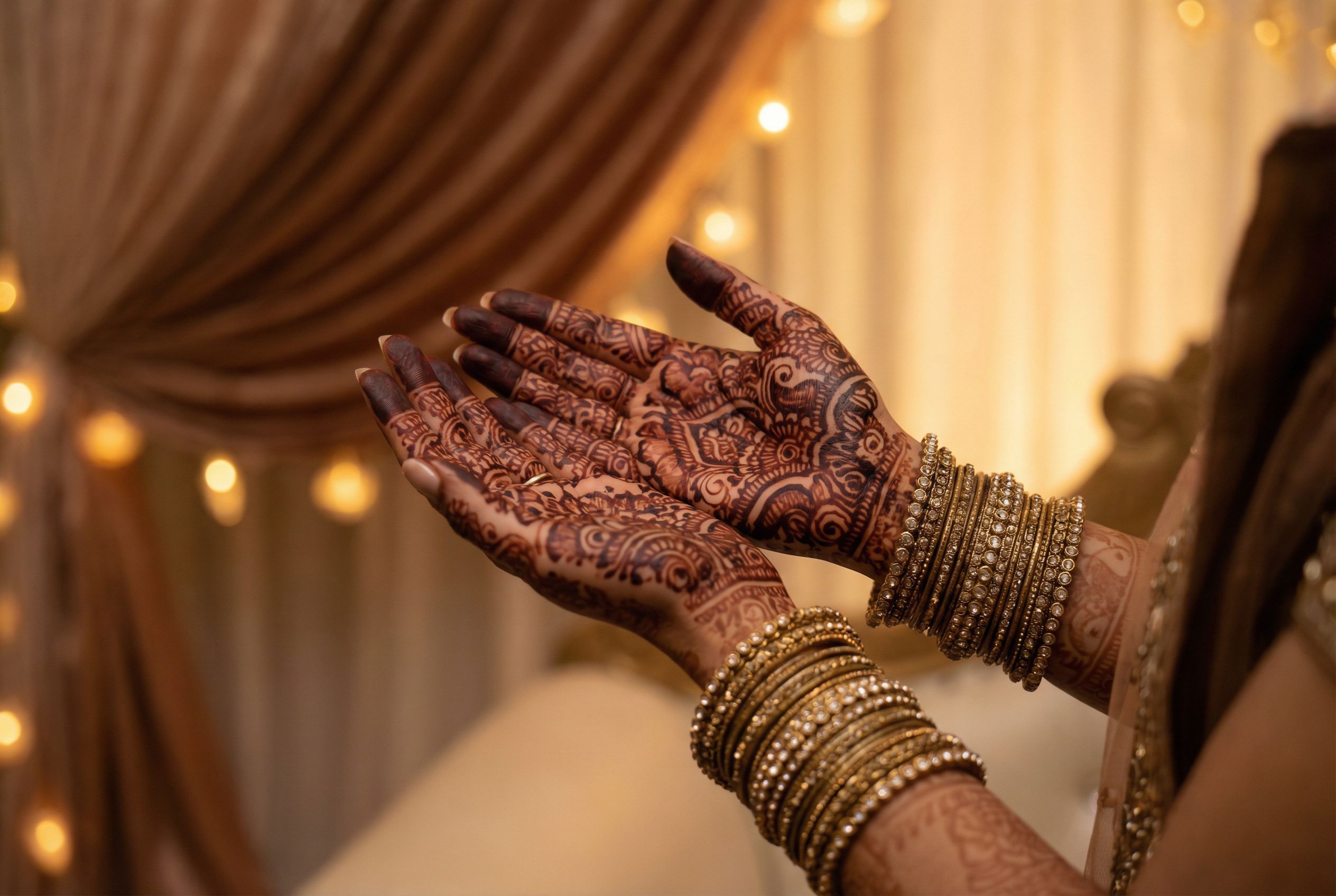
The bridal mehndi ceremony is a celebration in its own right. Friends, family, and relatives gather while the bride receives extensive designs. Games, music, and choreographed dances fill the evening, and guests receive smaller henna motifs on their hands. A beloved tradition holds that the darker the bride's henna stain, the stronger the marriage will be.
Festivals and Spiritual Significance
Henna also plays a role in festivals like Teej, which celebrates the union of Hindu deities during the monsoon season. Both married and unmarried women dress as brides, adorning their hands with henna. Different motifs carry specific meanings, representing various deities, natural elements, and blessings.
Spreading Westward
For decades, henna remained largely unfamiliar in the West. That changed in the 1990s when celebrities like Madonna, Liv Tyler, and Gwen Stefani showcased henna on red carpets, in music videos, and at fashion shows, sparking widespread interest. Henna resonated because it is temporary, painless, plant-based, and deeply personal. Today it is used at Western weddings, baby showers, and as a form of self-expression worldwide.
Popular Designs and Their Meanings
Every henna motif carries symbolism rooted in centuries of tradition. Here are 10 of the most popular patterns and what they represent.
Classic Motifs
Peacock -- The peacock represents beauty, grace, and royalty. Its elaborate tail feathers translate into sweeping, intricate patterns that naturally fill the back of the hand or forearm. One of the most recognized motifs in henna art, the peacock is a favourite for bridal henna, engagement parties, and formal celebrations. Modern interpretations use minimalist peacock outlines paired with negative space for a cleaner look.
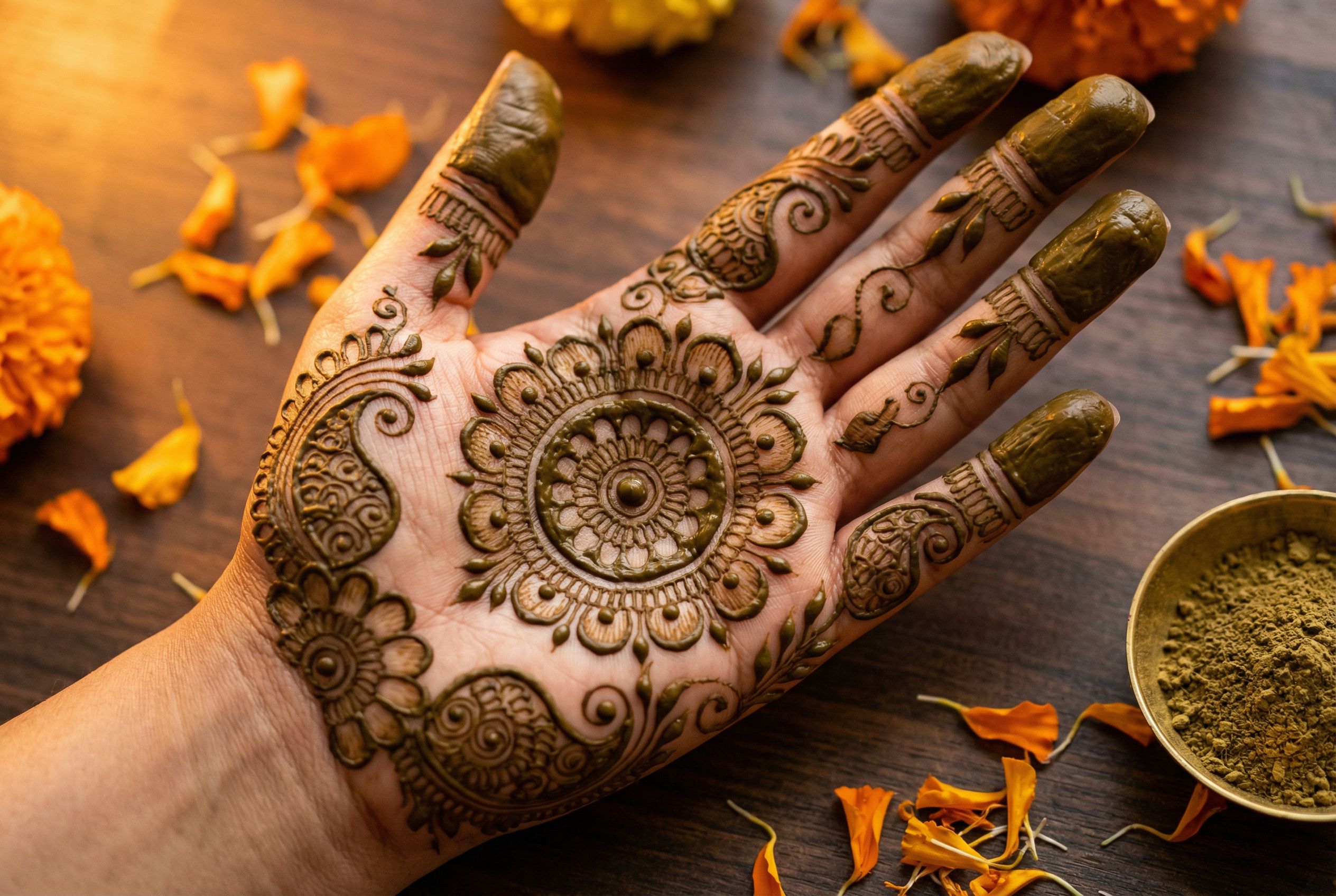
Flower -- Floral designs are the backbone of mehndi art worldwide. Bold blooms and layered petals symbolize happiness, joy, and new beginnings. Lotuses specifically represent purity and spiritual awakening in Hindu and Buddhist traditions, while roses carry associations with love and devotion. Flowers suit every occasion -- weddings, baby showers, and everyday self-expression.
Vine and Leaves -- Flowing vines and leaf patterns represent longevity, devotion, and vitality. Their organic structure symbolizes an abundance of love and the continuity of life. Vines are rarely used alone; they typically connect other motifs, creating movement across the hand or arm.
Paisley (Mango) -- The paisley, or buta, originated in Persia and is one of the oldest decorative motifs in the world. Its distinctive teardrop shape represents good fortune, fertility, and abundance. In henna, paisley designs are often layered and filled with intricate detail. They are especially popular for bridal and pregnancy celebrations.
Bud -- The bud motif represents new beginnings, fresh growth, and potential. It is closely tied to new life and is frequently incorporated into bridal henna (symbolizing the start of a new chapter) and baby shower designs (celebrating a growing family). Buds almost always appear alongside vines and leaves.
Contemporary and Regional Styles
Mandala -- Derived from the Sanskrit word for "circle," the mandala represents unity, wholeness, and the universe. These symmetrical, radiating patterns are meditative to both create and wear. In henna, mandalas are often placed at the centre of the palm and surrounded by complementary motifs. Modern versions use dot work and open spacing for an airy feel.
Arabic Style -- Characterized by bold, flowing patterns with generous negative space. Unlike the dense, fully filled Indian style, Arabic designs emphasize thick outlines, sweeping curves, and floral cascades. The open style makes it striking on any skin tone and suits everyday wear and parties.
Indo-Arabic Fusion -- This style blends the dense detail of Indian mehndi with the open flow of Arabic patterns. The result is both ornate and breathable. It has become one of the most requested styles globally because it suits a wide range of occasions and skin areas.
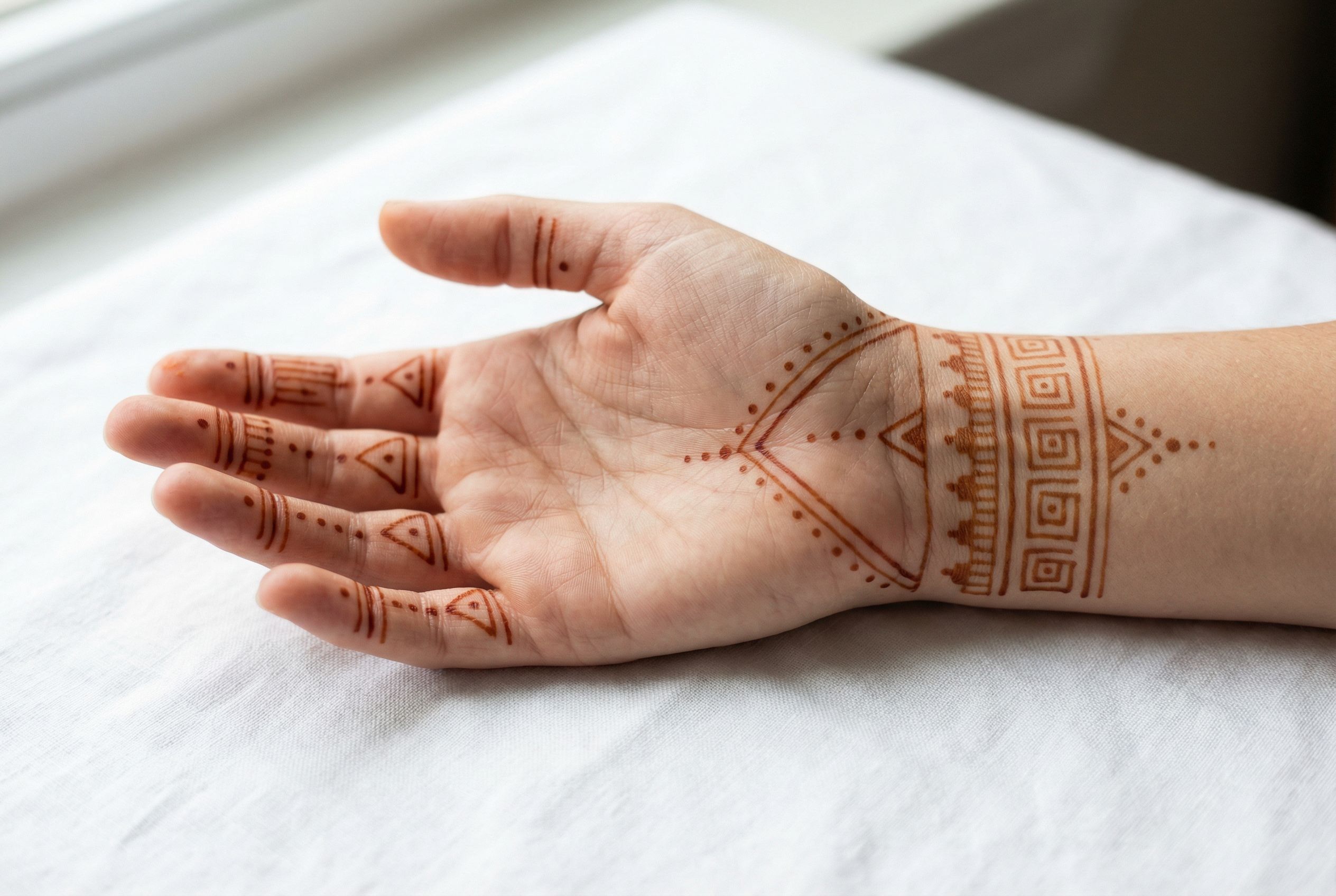
Moroccan (Berber) Style -- Moroccan henna draws from Berber geometric traditions. Bold lines, diamond shapes, triangles, and grid patterns dominate. These designs carry meanings tied to protection, strength, and tribal identity. Unlike the curves of Indian and Arabic styles, Moroccan henna is angular and structured.
Geometric and Minimalist -- A thoroughly modern approach that uses clean lines, dots, triangles, and repeating patterns without the organic curves of traditional styles. This aesthetic appeals to clients who love henna but want something that fits a contemporary, pared-back sensibility. Dot-and-line patterns along the fingers, leaving the palm bare, are especially popular.
Choosing Your Design
Selecting a henna design comes down to three things: occasion (elaborate for bridal, simpler for everyday), placement (palms hold stain longest; wrists and forearms suit trailing designs), and personal meaning (combine motifs that tell your own story). Your henna artist can help you blend styles into something entirely your own.
Henna in Modern Beauty
Henna's journey from ancient body art to modern beauty continues to evolve. Beyond traditional hand and body designs, henna has found a significant place in the brow world.
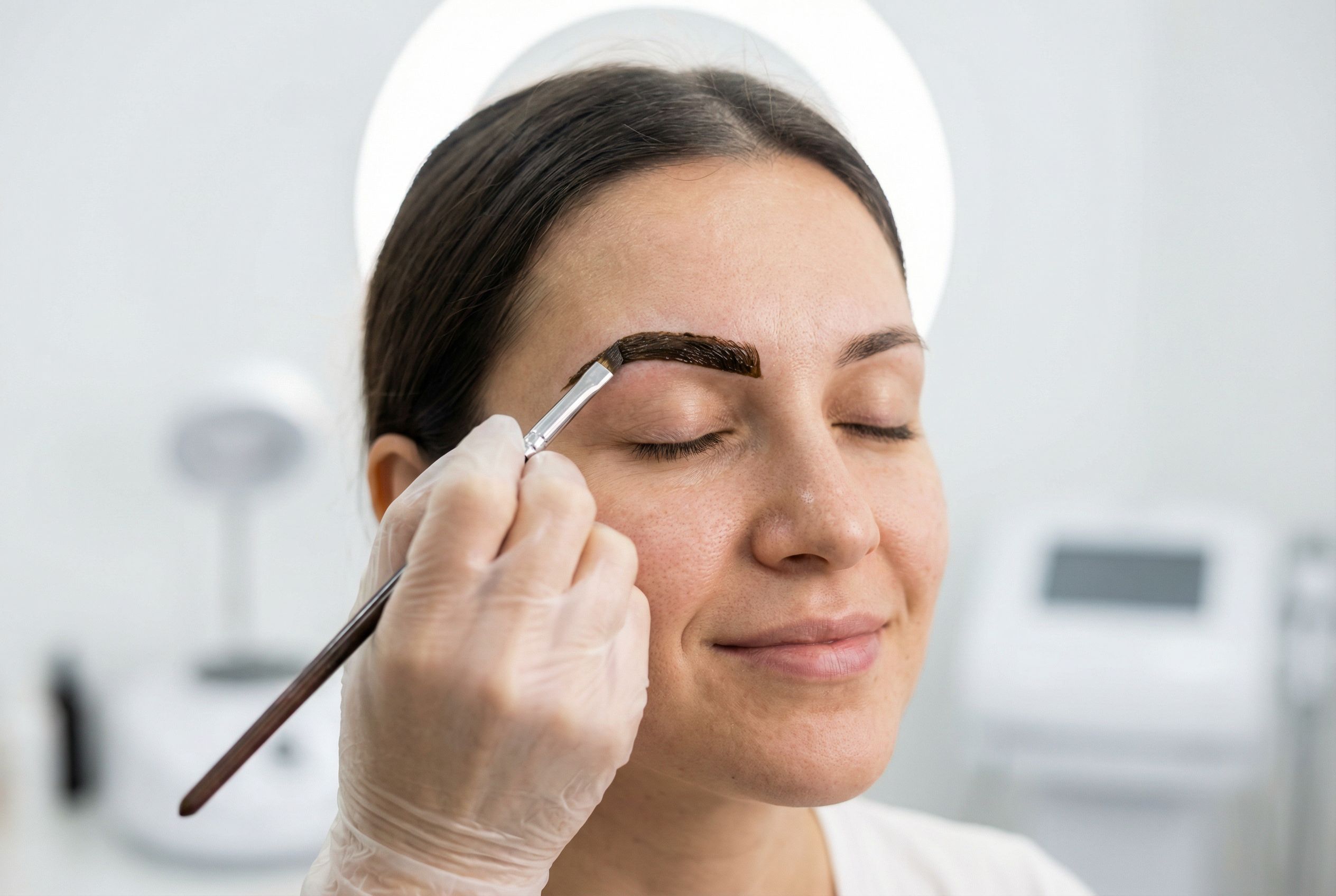
Henna brows use a refined, plant-based henna formula designed specifically for the brow area. The dye tints brow hairs and gently stains the skin beneath, creating a fuller, more sculpted look that lasts up to two weeks. Unlike chemical tints, henna is naturally derived and adds both hair colour and a skin-shadow effect that mimics the look of filled-in brows -- even without makeup.
For those interested in complementary brow services, eyebrow tinting provides a chemical-dye alternative, while brow lamination lifts and sets hairs into a fuller, brushed-up shape for 4 to 6 weeks.
Try Henna Brows at Urban Brows
At Urban Brows, we honour henna's rich history while bringing it into modern beauty. Our Henna Brows service is available at all four Edmonton-area locations and is one of our most popular treatments. Whether you want defined, natural-looking brows or a bold, sculpted shape, our artists will help you find the perfect shade and style.
We also offer traditional henna body art for special occasions. Whether you want bridal mehndi or a simple accent design, our artists bring precision and cultural respect to every application.
FAQ
How long does henna last on the skin?
Natural henna body art typically lasts 1 to 3 weeks, with the darkest stain appearing 24 to 48 hours after application. Palms and feet hold colour longest because the skin is thicker. Henna brows last about 1 to 2 weeks on the skin stain, with the hair tint lasting longer.
Is henna safe for sensitive skin?
Natural henna made from Lawsonia inermis leaves is generally well tolerated. However, "black henna" products often contain PPD (para-phenylenediamine), which can cause serious skin reactions. Always ask your artist about ingredients and avoid any product labelled as "black henna."
Does getting henna hurt?
Not at all. Henna paste is applied to the surface of the skin with an applicator cone or bottle. There are no needles and no pain involved.
Can I mix different henna styles in one design?
Absolutely. Combining styles is one of the most popular approaches today. An Indo-Arabic fusion, for example, blends dense Indian detail with open Arabic flow for a design that is both intricate and breathable. Your artist can help you blend any combination of motifs.
How do I make my henna stain darker?
Keep the paste on as long as possible (4 to 8 hours), avoid water on the area for the first 24 hours, and apply a thin layer of coconut or olive oil after the paste flakes off. Body heat also deepens colour, which is why palms stain so richly.
Is getting henna cultural appropriation?
Henna has been shared across cultures for thousands of years. Approaching it with respect, understanding its origins, and supporting skilled artists are meaningful ways to honour the tradition. Many henna artists welcome clients of all backgrounds.
Ready to Experience Henna?
Whether you want defined, fuller-looking brows or a beautiful body art design for a special occasion, our team is here to help. Book your henna brows appointment at any of our four Edmonton-area locations.
For inspiration and before-and-afters, follow us on Instagram.