
Skin Lab · a light-based skin scan
See your skin the way light sees it.
A free 90-second scan that turns your phone screen into a calibrated light source — then maps redness, texture, pores, shine, lines, and pigment across your face. No account. No photos kept.
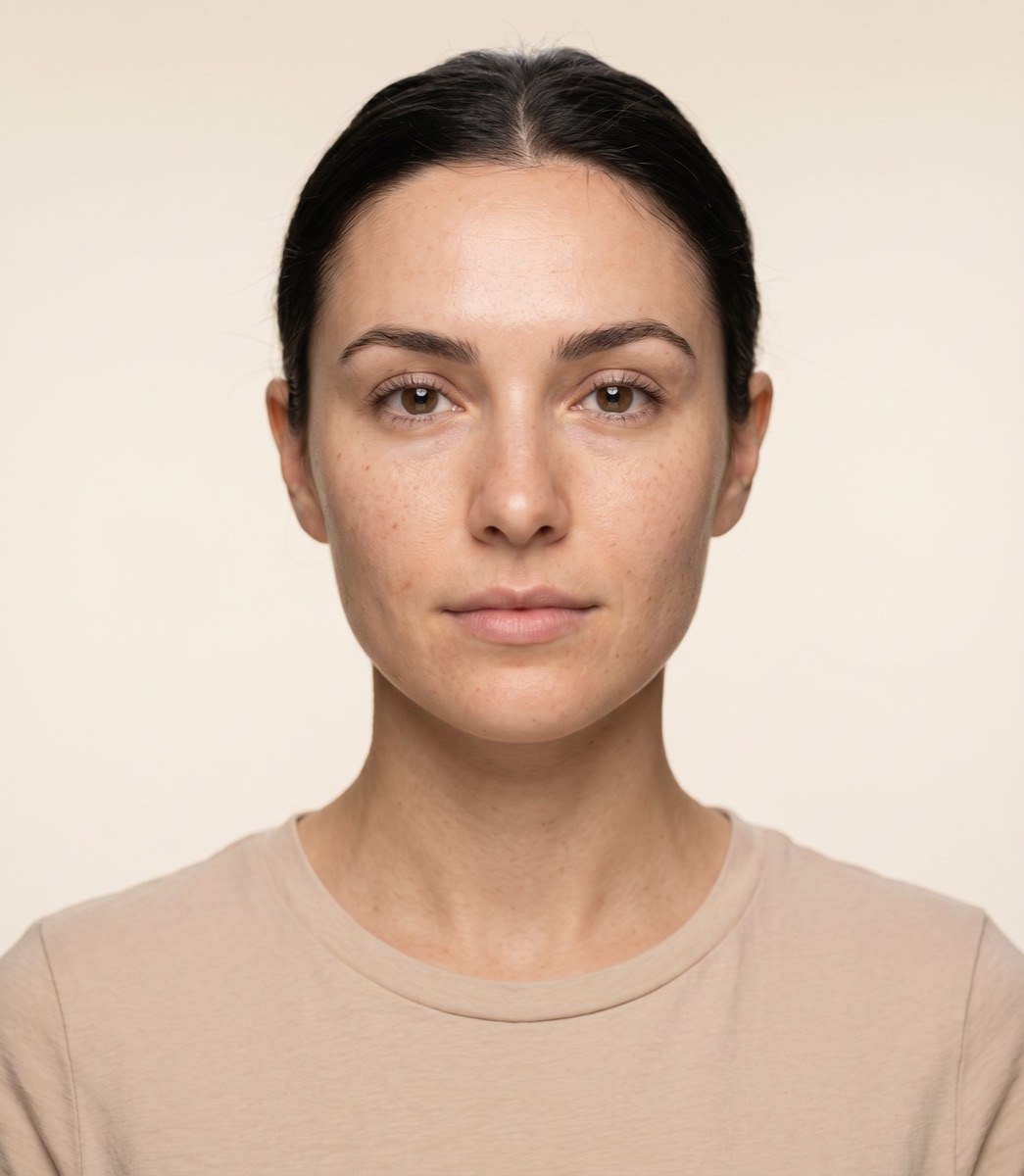
Ambient baseline
Screen-lit portrait
Red sweep
Green sweep
Blue sweep
Fig. 01 — the five-shot light sweep
How it works
Three passes of light. No guesswork in between.
- 01
Capture
Your screen flashes five calibrated colours while the front camera records how your skin answers each one. Guided, about 90 seconds.
- 02
Subtract
The ambient frame — your room's light — is subtracted from every shot, leaving only the screen's known light on your skin.
- 03
Map
Signal processing turns what remains into zone-by-zone maps of seven surface signals, scored relative to your own skin.
It's signal processing, not a chatbot guessing from a selfie — the same flash-difference technique used in imaging research, rebuilt for the phone already in your hand.
- Redness62/100 · Left cheek
- Texture78/100 · Forehead
- Shine44/100 · Nose
- Pores71/100 · Nose
The report
Not a score out of ten. A map you can act on.
Every signal comes back as an overlay on your own face — you can see where redness concentrates, which zone carries the texture, whether shine is an all-over thing or just your nose at 3 p.m.
Scores are relative to your own skin in this capture — not a beauty standard, not a stranger's baseline. It's the difference between “your skin is a 7” and actually knowing what's going on.
What it reads
Seven signals, separated by wavelength.
01Redness
where hemoglobin sits closest to the surface
02Pigment
melanin distribution — your skin's sun memory
03Texture
the micro-relief the eye reads as glow
04Pores
visibility and density, zone by zone
05Shine
specular reflection — oil, not light
06Lines
fine directional creases as they form
07Evenness
how uniformly tone flows across zones
All seven, from one 90-second capture.
- Photos analyzed,
then discarded - Scores relative
to your own skin - A map,
not a diagnosis
Ninety seconds. A darker room helps.
Dim the lights, turn your screen brightness up, take your glasses off. Made by the skin-obsessed team behind Urban Brows in Edmonton — because better skin conversations start with better information.
Skin Lab maps how light interacts with the surface of your skin in these specific photos. It describes cosmetic appearance only and is not a medical assessment.
01What the scan reads
A free skin analysis you can run from your couch.
Skin Lab turns your phone screen into a calibrated light source. A guided 90-second capture flashes white, red, green, and blue across your face while the front camera records how your skin answers each wavelength — then subtracts your room's light so only the known signal remains.
The result is a zone-by-zone report of seven surface signals — redness, pigment, texture, pores, shine, fine lines, and evenness — scored relative to your own skin, with the areas worth attention flagged. Everything runs in your browser: photos are never uploaded or stored.
Redness
Where hemoglobin sits closest to the surface — flushing, irritation, broken capillaries.
Pigment
Melanin distribution: sun memory, post-blemish marks, uneven tone.
Texture & pores
The micro-relief the eye reads as glow, and pore visibility zone by zone.
Shine, lines & evenness
Oil versus light, fine directional creases, and how uniformly tone flows.
02From scan to chair
The report is a brief. The facial is the answer.
If your map flags redness, congestion, or dullness, that's exactly what a HydraFacialis built to address — a medical-grade facial that cleanses, exfoliates, and infuses serums matched to what your skin actually needs. Bring your Skin Lab report to any of our four Edmonton studios and we'll plan the treatment around it.
New to facials? Start with what a HydraFacial actually is or what to expect from your first one.
More free tools
- Lash Lab — free lash consultation →
Three short reads, then a lash brief worth bringing to the chair.
- Brow Analyzer — AI brow mapping →
Find the brow shape your bone structure asks for.
- Try-It — brow & lash visualizer →
Preview a new look on your own photo before you book.
03Questions, answered
- Is the skin analysis really free?
- Yes. Skin Lab is a free tool from Urban Brows Edmonton. No account, no payment details, no obligation — run as many scans as you like.
- What happens to my photos?
- Nothing leaves your device. The whole analysis runs in your browser — your photos are never uploaded, stored, or seen by anyone. Close the tab and they're gone.
- How does light-based skin analysis work?
- Your phone screen flashes white, red, green, and blue while the front camera records how your skin answers each colour. Because hemoglobin, melanin, and surface oil each respond to different wavelengths, subtracting the room light and comparing the sweeps lets Skin Lab map redness, pigment, texture, pores, shine, lines, and evenness zone by zone.
- How accurate is it?
- Skin Lab maps how light interacts with the surface of your skin in your specific photos, scored relative to your own skin — it is a cosmetic reading, not a medical assessment or diagnosis. For anything that worries you, see a dermatologist.
- What should I do with my results?
- Treat the report as a brief. If it flags redness, congestion, or dullness, a HydraFacial at any Urban Brows Edmonton studio is the natural next step — bring the report and we'll plan the treatment around what it found.
- Do I need to download an app?
- No. Skin Lab runs entirely in the browser on any phone or laptop with a front-facing camera. The guided scan takes about 90 seconds.