
Eyebrow Threading: The Complete Guide to Perfect Brows

Eyebrow threading is the gold standard of brow shaping -- a centuries-old hair removal technique that uses nothing but a single cotton thread to sculpt clean, defined arches with surgical precision. No hot wax, no harsh chemicals, no guesswork. Just thread, skill, and the kind of control that other methods simply cannot match.
At Urban Brows in Edmonton, we have performed tens of thousands of threading appointments. Our artists train extensively in traditional threading technique and modern brow architecture. Whether you are considering threading for the first time or you are a long-time devotee looking to deepen your knowledge, this guide covers absolutely everything you need to know about eyebrow threading -- from the ancient origins of the craft to step-by-step aftercare, cost breakdowns, and honest answers to the questions our clients ask most.
What Is Eyebrow Threading?
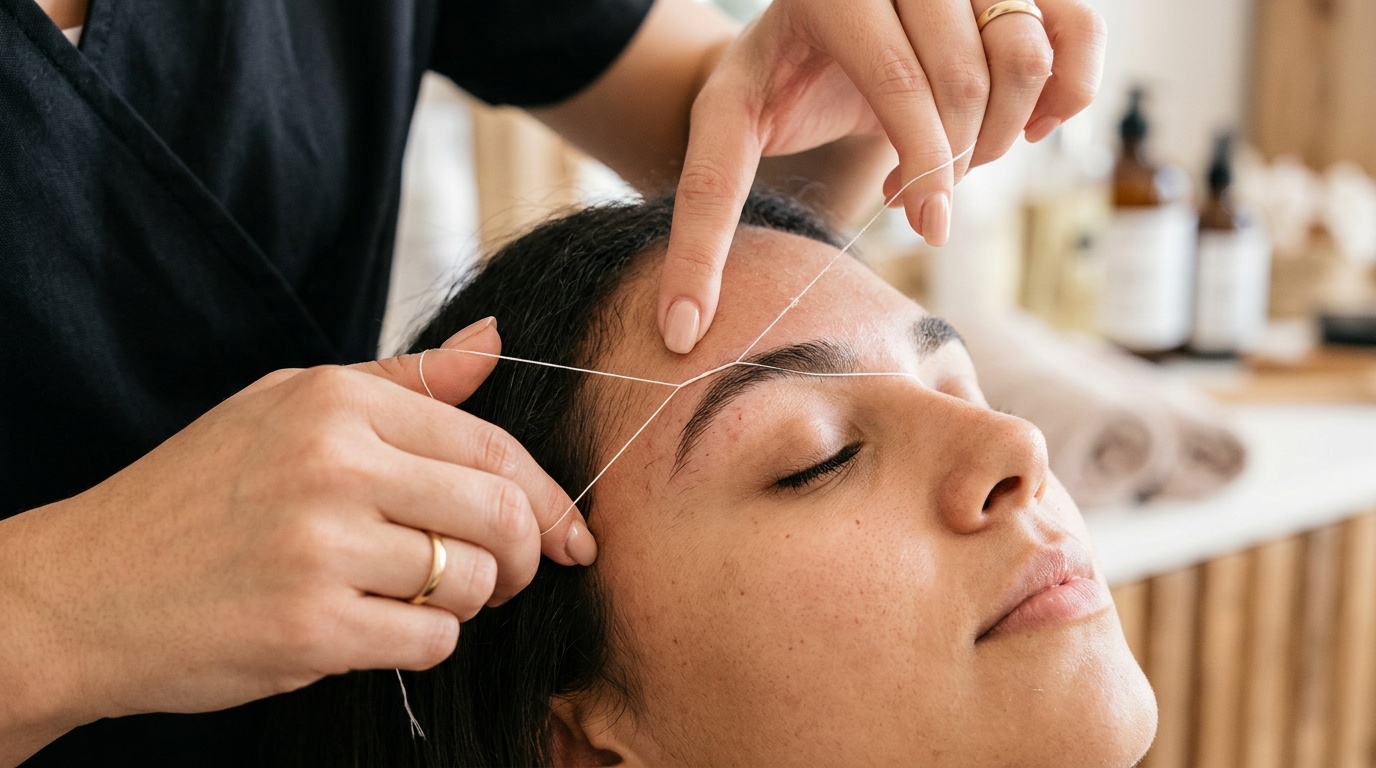
Eyebrow threading is a hair removal method that uses a thin, doubled cotton thread to remove unwanted hair directly from the follicle. The practitioner twists the thread into a tight double helix and rolls it across the skin in swift, precise motions. As the twisted section moves, it catches individual hairs and lifts them out cleanly at the root.
Unlike waxing, which adheres to both skin and hair and pulls indiscriminately, threading targets only the hair itself. This makes it exceptionally precise -- your threading artist can remove a single hair or an entire row in one fluid motion, creating sharp lines and seamless gradients that define a truly sculpted brow.
A Brief History of Threading
Threading is not a modern beauty trend. The technique -- known as khite in Arabic, fatlah in Egyptian, and abru in Persian -- has been practiced for over 6,000 years across South Asia, the Middle East, and North Africa. In many cultures, threading was (and still is) a rite of passage, performed on young women before their wedding day as a symbol of beauty and readiness for marriage.
The practice was passed down through generations of women, often learned at home from mothers and grandmothers long before it ever entered a salon setting. Threading arrived in Western markets in the late 20th century and rapidly gained popularity because the results spoke for themselves: cleaner lines, less irritation, and faster regrowth cycles than waxing or tweezing alone.
Today, threading is practiced worldwide and remains the preferred brow-shaping technique across cultures -- a testament to its effectiveness that no modern technology has managed to replace.
How Does Eyebrow Threading Work?
Understanding the mechanics of threading helps explain why the results are so consistently clean. Here is a step-by-step breakdown of the threading technique itself.
The Thread Setup
The practitioner cuts a length of cotton thread -- typically 12 to 18 inches -- and ties the ends together to form a loop. This loop is then twisted multiple times in the centre, creating an hourglass shape with a twisted section in the middle.
The Rolling Motion
The practitioner holds the thread with both hands (and sometimes anchors one end with the teeth for additional tension, though at Urban Brows we use a hands-only technique for maximum hygiene). By opening and closing the fingers of alternating hands, the twisted section moves back and forth like a tiny lasso.
Hair Capture and Removal
As the twisted section rolls across the skin's surface, it catches hairs in its coils. The rolling motion pulls each hair out from the follicle -- root and all. Because the thread moves at skin level, it can grasp hairs as short as 1/16th of an inch, far shorter than the quarter-inch minimum required for waxing.
Precision Shaping
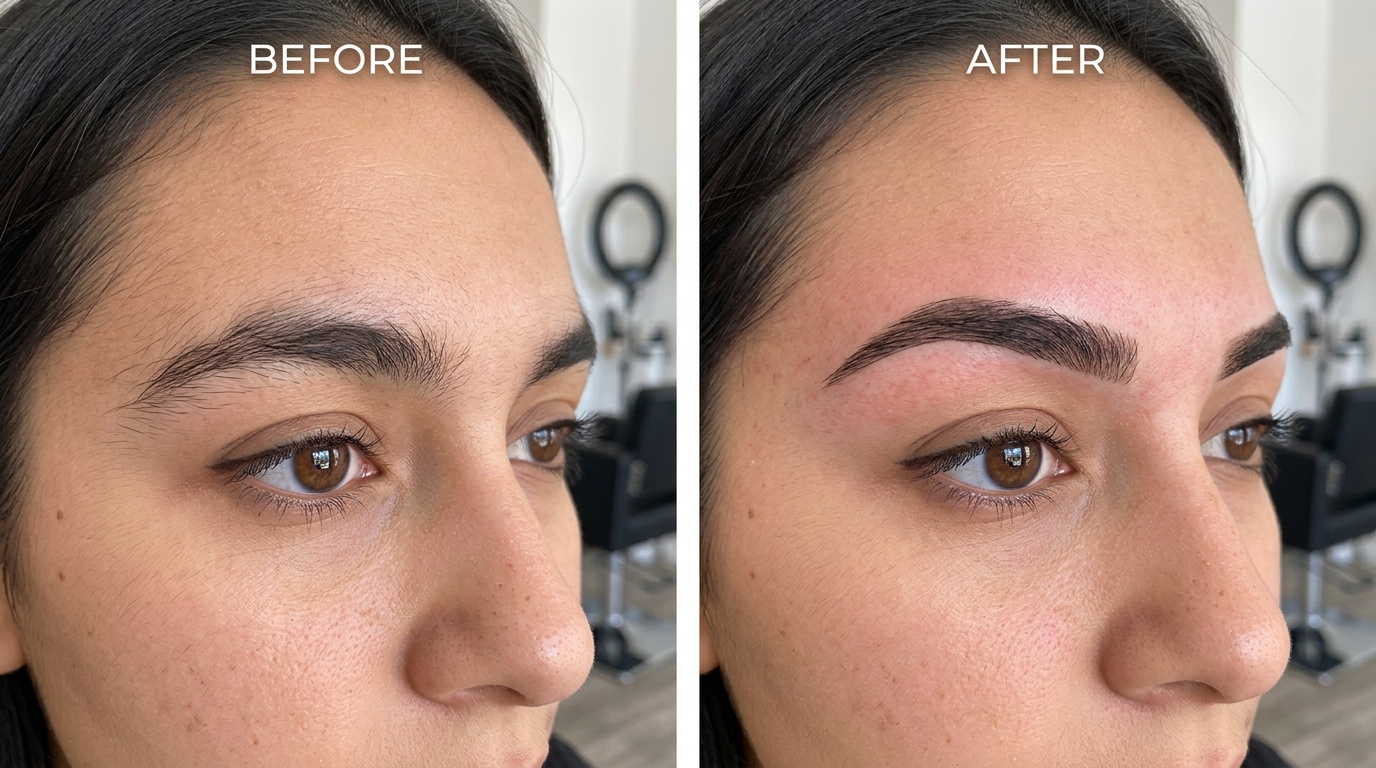
The practitioner guides the thread along the natural brow line, removing hair row by row. This level of control allows the artist to create crisp edges, clean arches, and smooth transitions between the shaped brow and the natural hairline. It is this row-by-row precision that makes threading the preferred method for creating defined, architectural brows.
Does Eyebrow Threading Hurt?
This is the most common question we hear, and you deserve an honest answer: yes, there is some sensation, but it is far more manageable than most people expect.
What Threading Feels Like
Most clients describe the sensation as a series of quick, tiny plucking motions -- like someone running a rubber band lightly across the skin. The feeling is brief and localised. Because threading removes multiple hairs simultaneously in a smooth, rolling motion, many people find it less painful than tweezing individual hairs one by one.
Pain Level Comparison
On a scale of 1 to 10, most of our clients rate eyebrow threading between a 3 and a 5 on their first visit. By the third or fourth appointment, the majority rate it a 2 or 3 as the hair follicles weaken and regrowth becomes finer.
For a deeper look at managing discomfort, see our dedicated guide: Does Eyebrow Threading Hurt?
Factors That Affect Pain Level
- Your personal pain threshold. Everyone is different, and that is completely normal.
- Where you are in your menstrual cycle. Skin tends to be more sensitive in the days before and during menstruation due to hormonal fluctuations.
- Caffeine intake. Caffeine can heighten nerve sensitivity. Consider skipping your morning coffee before your appointment if you are concerned about discomfort.
- How long since your last session. The first threading appointment tends to be the most intense because existing hairs are thicker and more deeply rooted. Subsequent sessions are progressively easier as hair grows back finer.
- Skin sensitivity. If you use retinoids, AHAs, or other exfoliating products, your skin may be more reactive. Let your threading artist know about your skincare routine beforehand.
Tips for Minimising Discomfort
- Avoid threading during the first few days of your period.
- Skip caffeine for at least two hours before your appointment.
- Apply a small amount of numbing cream 20 to 30 minutes beforehand if you are very sensitive (ask your artist for recommendations).
- Breathe steadily through the process -- holding your breath tenses the skin and can increase the pulling sensation.
- Stay consistent with your threading schedule. Regular appointments (every 3 to 4 weeks) mean finer regrowth and less discomfort each time.
Benefits of Eyebrow Threading
Threading has endured for millennia because it delivers results that other hair removal methods struggle to match. Here are the key advantages.
Unmatched Precision
Threading allows the artist to remove individual hairs or entire rows with complete control. This makes it possible to create razor-sharp lines, perfectly symmetrical arches, and clean, defined shapes that other methods cannot reliably achieve. For brow architecture, precision is everything.
Ideal for Sensitive Skin
Because threading does not involve any chemicals, adhesives, or heat, it is the gentlest hair removal method available. There is no risk of chemical burns, allergic reactions to wax ingredients, or the micro-tearing that can occur when wax is pulled from delicate facial skin. If you have eczema, rosacea, or generally reactive skin, threading is likely your best option. Learn more about eyebrow threading vs other methods for sensitive skin types.
No Chemicals or Heat
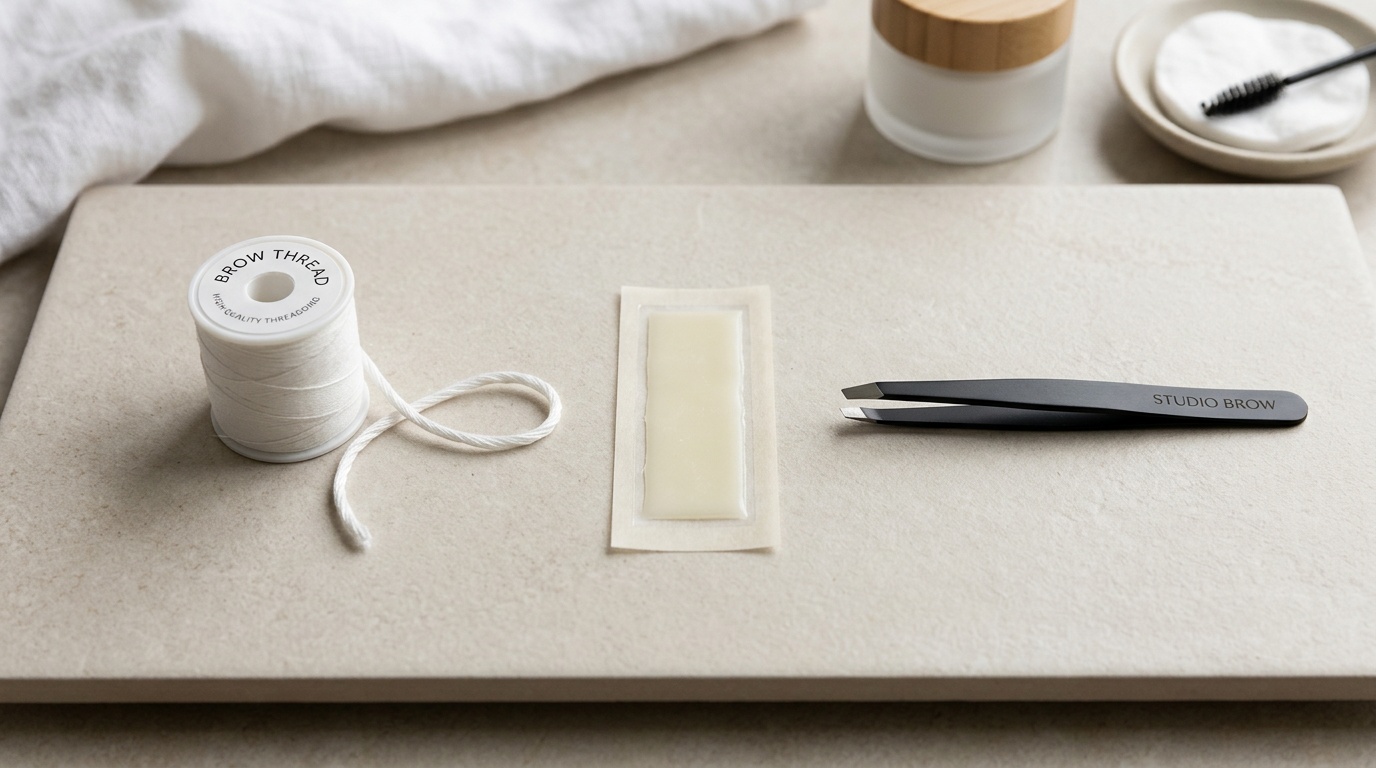
The only materials involved in threading are cotton thread and the practitioner's skill. No hot wax, no depilatory creams, no chemical adhesives. This makes threading suitable for clients who are pregnant, have allergies, or prefer to avoid synthetic products on their skin.
Minimal Skin Contact
Unlike waxing, which requires pressing a warm substance onto the skin and then pulling it away, threading barely touches the skin's surface. This significantly reduces the risk of post-treatment breakouts, ingrown hairs, and irritation.
Works on Short Hair
Waxing requires hair to be at least a quarter-inch long to grip effectively. Threading can remove hairs as short as 1/16th of an inch, which means you can maintain a cleaner look between appointments without waiting for significant regrowth.
Clean, Defined Brow Shape
The row-by-row removal creates a defined edge that looks intentional and architectural rather than blurred or over-plucked. This is why threading remains the method of choice for precision brow shaping at professional studios worldwide.
Slower, Finer Regrowth
Because threading removes hair from the root, repeated sessions gradually weaken the hair follicle. Over time, regrowth becomes finer, lighter, and sparser. Many of our long-term clients find that their maintenance sessions become quicker and more comfortable as the months go by.
Threading vs Waxing vs Tweezing: A Detailed Comparison
Choosing the right brow-shaping method depends on your skin type, pain tolerance, budget, and desired outcome. Here is a side-by-side comparison of the three most common techniques.
| Feature | Threading | Waxing | Tweezing |
|---|---|---|---|
| Precision | Excellent -- single-hair accuracy with clean lines | Moderate -- removes patches, harder to control edges | Good for individual hairs, but slow and inconsistent for shaping |
| Pain Level | Mild to moderate (3-5/10 first time) | Moderate to high (5-7/10) | Low per hair, but cumulative discomfort over a full session |
| Speed | 5-15 minutes for full brows | 10-20 minutes for full brows | 20-45 minutes for a full cleanup |
| Minimum Hair Length | 1/16 inch | 1/4 inch | Any length you can grip |
| Skin Irritation | Minimal -- no chemicals or heat | Common -- redness, potential burns, allergic reactions | Minimal per hair, but repeated pulling can cause swelling |
| Ingrown Hairs | Rare | Moderate risk | Moderate to high risk |
| Results Duration | 2-4 weeks | 2-4 weeks | 1-3 weeks |
| Chemical Exposure | None | Wax ingredients, resins, dyes | None |
| Suitable for Sensitive Skin | Yes -- the preferred method | Not recommended | Depends on technique |
| Cost (per session) | $10-$30 | $15-$35 | Free (DIY) or $15-$25 (salon) |
| Skill Required | High -- requires trained artist | Moderate | Low |
| Best For | Precise shaping, sensitive skin, defined arches | Large areas, quick removal | Touch-ups between professional sessions |
The bottom line: for shaping eyebrows with precision and minimal irritation, threading is the clear winner. Waxing has its place for larger body areas, and tweezing works for quick touch-ups between professional appointments. For a thorough breakdown, read our full eyebrow threading vs other methods comparison.
How to Prepare for Your First Eyebrow Threading Appointment
A little preparation goes a long way toward ensuring a great experience and optimal results. Here is what to do (and what to avoid) before your first threading session.
Two to Three Weeks Before
- Stop tweezing, waxing, and trimming. Let your brows grow out as much as possible. Your threading artist needs to see your full, natural growth pattern to map the best shape for your face. Resist the urge to clean up strays -- we need every hair to work with.
- Start thinking about your ideal shape. Save reference photos of brows you love. Bring them to your appointment so your artist can understand your aesthetic preferences. Not sure what shape suits you? Try our AI Brow Analyzer to get a personalised recommendation based on your face shape, or use our AI Visualizer to preview different brow styles before you commit.
The Day Before
- Discontinue retinoids and exfoliating acids (AHAs, BHAs, retinol) at least 48 hours before your appointment. These products thin the outer layer of skin and can increase sensitivity and redness.
- Avoid prolonged sun exposure or tanning beds for 24 to 48 hours before threading.
The Day Of
- Arrive with a clean face. Remove all brow makeup, tinted moisturiser, and sunscreen from the brow area before your appointment. Clean skin allows the thread to grip hairs effectively and reduces the risk of post-treatment breakouts.
- Skip the caffeine if you are concerned about pain sensitivity.
- Communicate openly. Tell your artist about any skin conditions, medications (especially blood thinners or Accutane), recent cosmetic procedures, or allergies. This helps us tailor your treatment for the best possible outcome.
For more on maintaining your brows at home, see our guide to brow maintenance between appointments.
What to Expect During Your Appointment at Urban Brows
Walking into your first threading appointment can feel uncertain, so here is exactly what happens from the moment you arrive at any of our Urban Brows locations.
Step 1: Welcome and Consultation (2-3 Minutes)
Your threading artist greets you, reviews any reference photos you have brought, and discusses your desired shape. We ask about your skincare routine, any sensitivities, and your brow goals -- whether that is a natural, full look or a more sculpted, defined arch. If you have used our AI Brow Analyzer or AI Visualizer, share your results and we will use them as a starting point.
Step 2: Cleansing and Mapping (2 Minutes)
Your artist gently cleanses the brow area to remove any oils, makeup residue, or product. Then comes mapping -- using a brow pencil or measuring tool, your artist marks key points (the start, arch, and tail of each brow) to ensure symmetry and proportion. This map serves as a precise guide for the threading process.
Step 3: Threading (5-10 Minutes)
This is where the transformation happens. Your artist takes a fresh, sterile length of cotton thread, twists it into position, and begins removing unwanted hair row by row. At Urban Brows, we use a hands-only technique -- no mouth contact with the thread, ever -- for maximum hygiene.
You may feel a quick, plucking sensation as each row of hair is removed. Most clients find the sensation manageable and many are surprised at how fast the process moves. Your artist works methodically around each brow, constantly checking symmetry and shape against the mapped guidelines.
Step 4: Refinement (1-2 Minutes)
After the threading is complete, your artist examines the brows closely under bright light. Minimal tweezing may be used to remove any isolated hairs the thread could not reach, and light trimming with brow scissors addresses any hairs that are the correct position but too long.
Step 5: Soothing and Aftercare (1-2 Minutes)
A calming mist, aloe gel, or rose water is applied to reduce any temporary redness and soothe the skin. Your artist walks you through aftercare instructions and answers any remaining questions.
Step 6: The Reveal
You get a mirror, and we walk through the final shape together. We want you to love your brows before you leave the chair. If any small adjustments are needed, we make them on the spot.
Total appointment time: approximately 10 to 20 minutes, depending on the amount of hair removal needed and whether it is a first-time shaping or a maintenance visit.
Eyebrow Threading Aftercare: How to Protect Your Results
Proper aftercare ensures your freshly threaded brows heal quickly, look their best, and last as long as possible. Here is your complete aftercare guide.
The First 24 Hours
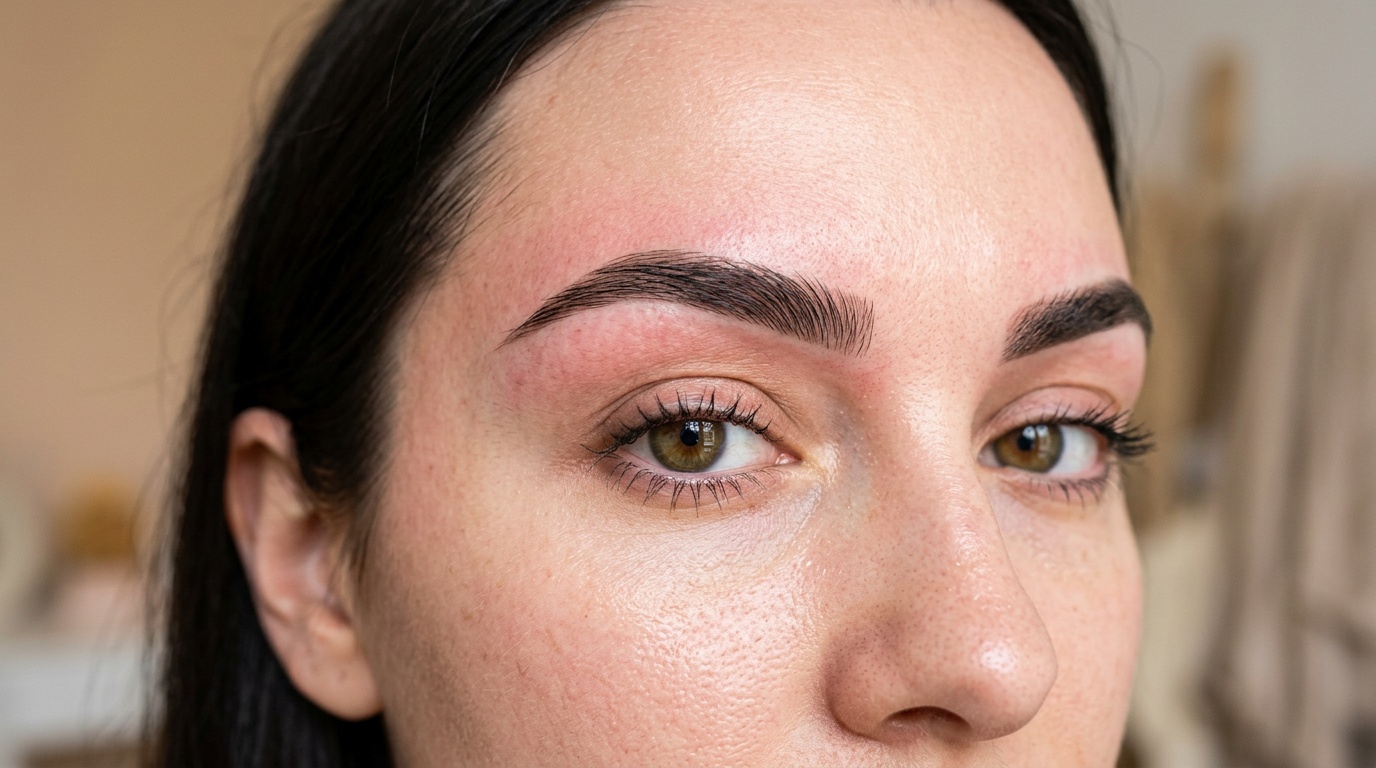
The first day after threading is when your skin is most vulnerable. The follicles are open, and the treated area may be slightly pink or sensitive. Follow these guidelines closely:
- Do not touch your brows. Your hands carry bacteria that can cause breakouts or infection in freshly opened follicles.
- Skip makeup on the brow area. Avoid applying foundation, concealer, brow powder, or any cosmetic product directly on or around your brows for at least 12 to 24 hours.
- Avoid heat and steam. Skip hot showers (warm is fine, just avoid directing hot water at your face), saunas, steam rooms, and hot yoga for 24 hours. Heat opens pores further and increases the risk of irritation.
- Skip the gym. Sweat can irritate freshly threaded skin and introduce bacteria into open follicles. Wait at least 12 hours before intense exercise.
- Apply a cool compress if you experience redness or swelling. A clean cloth dampened with cold water or a gentle application of pure aloe vera gel works well.
- Avoid direct sun exposure. Freshly threaded skin is more susceptible to UV damage. If you must be outdoors, wear a hat or apply SPF after the initial 12-hour window.
Days 2-7
- Resume your normal skincare routine gradually. You can reintroduce gentle cleansers and moisturisers on day two. Wait at least 48 to 72 hours before reintroducing retinoids, AHAs, BHAs, or any exfoliating product.
- Apply SPF daily. The brow area is often neglected in sunscreen application, but UV protection helps prevent hyperpigmentation, especially in the days following hair removal.
- Moisturise the brow area. A lightweight, fragrance-free moisturiser keeps the skin supple and reduces flakiness as the follicles close and heal.
Ongoing Maintenance
- Resist the urge to tweeze. Between threading appointments, leave stray hairs alone. Tweezing disrupts the growth cycle and can make it harder for your artist to maintain a consistent shape at your next session. For tips on what you can safely do at home, read our brow maintenance between appointments guide.
- Brush your brows daily. A clean spoolie brushed upward and outward keeps your brows looking groomed and helps you spot when it is time for your next appointment.
- Book your next appointment before significant regrowth. Maintaining a regular schedule (every 3 to 4 weeks) keeps your brows consistently polished and makes each session quicker and more comfortable.
How Much Does Eyebrow Threading Cost?
Eyebrow threading is one of the most affordable professional brow services available. Here is a general pricing breakdown.
Average Eyebrow Threading Cost
- Basic eyebrow threading: $10 to $30 per session, depending on your location and the studio.
- Brow threading with shaping consultation: $20 to $40, common for first-time clients who want a custom shape designed for their face.
- Full face threading (brows, upper lip, chin, forehead): $30 to $65.
- Brow threading with tinting or henna: $35 to $60 when bundled.
At Urban Brows, our eyebrow threading is competitively priced and includes a thorough consultation, precision shaping, and aftercare. For current pricing, visit our brow sculpting service page or book online.
What Affects the Price?
- Location. Threading tends to cost more in major metropolitan areas and less in smaller cities.
- Studio reputation and artist experience. Highly trained threading artists with years of experience may charge a premium, and the results typically justify the difference.
- Additional services. Tinting, lamination, or other add-ons increase the total cost but offer enhanced results. Interested in lamination? Check out our guide on what is brow lamination.
- First-time vs maintenance. A first-time shaping appointment may take longer and cost slightly more than a quick maintenance visit.
Cost Over Time
When you compare the long-term cost of threading to other brow maintenance methods, threading is remarkably economical. At an average of $15 to $25 per session every three to four weeks, you are looking at roughly $200 to $400 per year for consistently polished, professionally shaped brows. That is less than the cost of a single microblading session, with no risk of semi-permanent regret.
How Often Should You Get Eyebrow Threading?
The ideal threading frequency depends on your individual hair growth cycle, but here are general guidelines.
Recommended Schedule
- Every 2 to 3 weeks for clients who prefer very clean, defined brows with minimal visible regrowth.
- Every 3 to 4 weeks for most clients. This is the sweet spot that balances maintenance with allowing enough growth for your artist to work with.
- Every 4 to 6 weeks for clients with naturally slower hair growth or those who prefer a softer, less manicured look.
Signs It Is Time for Your Next Appointment
- You notice stray hairs growing outside your brow shape.
- Your arch is starting to lose definition.
- The clean edges around your brows are looking fuzzy or blurred.
- You are tempted to start tweezing at home (this is your cue to book instead).
Building a Consistent Schedule
Consistency is key to great brows. When you maintain a regular threading schedule, several things happen:
- Hair regrowth becomes finer and sparser. Repeated removal from the root weakens the follicle over time.
- Appointments become faster and more comfortable. Less hair to remove means a quicker session with less sensation.
- Your shape stays consistent. Regular maintenance prevents the need for dramatic reshaping, which means less hair removal per visit and a more predictable outcome.
We recommend booking your next appointment at the end of each session. This keeps you on schedule and ensures you get your preferred time slot. Book your next threading appointment online.
Who Is Eyebrow Threading Best For?
Threading is genuinely suitable for almost everyone, but certain groups benefit particularly from this method.
Threading Is Ideal For:
- People with sensitive skin. No chemicals, no heat, no adhesives. Threading is the least reactive hair removal method available for the face.
- Those prone to breakouts. Because threading minimises skin contact and does not clog pores with wax residue, it is less likely to cause post-treatment acne.
- Retinoid and exfoliant users. If you use prescription retinoids (tretinoin, adapalene) or active skincare ingredients, waxing can cause skin lifting and tearing. Threading is a much safer alternative.
- Pregnant or nursing women. Threading involves no chemicals that could be absorbed through the skin, making it a safe choice throughout pregnancy and breastfeeding.
- People with fine or thin brows. Threading's precision makes it ideal for carefully shaping sparse brows without over-removing. For more on working with thinner brows, see our thin eyebrows guide.
- Anyone who wants defined, architectural brows. If sharp lines and clean shapes are your goal, threading delivers like nothing else. Read our guide on how to shape eyebrows for more on finding your ideal shape.
- People with coarse or thick hair. Threading removes even the thickest hairs from the root without breakage.
- Those with allergies to wax ingredients. If you have experienced reactions to waxing products, threading eliminates that risk entirely.
When Threading May Not Be the Best Choice
- If you have active skin infections, open wounds, or severe sunburn in the brow area, wait until the skin has healed before threading.
- If you have had recent cosmetic procedures (Botox, fillers, chemical peels, laser treatments) near the brow area, consult your dermatologist about timing. We generally recommend waiting at least two weeks.
- If you are on Accutane (isotretinoin), threading is generally considered safer than waxing, but your skin may still be hypersensitive. Discuss with your prescribing physician.
Eyebrow Threading FAQ
How long does eyebrow threading take? A standard eyebrow threading appointment takes 5 to 15 minutes. First-time shaping sessions may run closer to 15 to 20 minutes because they include a consultation and more extensive hair removal. Maintenance appointments are typically 5 to 10 minutes.
Is eyebrow threading better than waxing? For precision brow shaping, yes. Threading offers superior accuracy, works on shorter hair, involves no chemicals or heat, and is far gentler on sensitive skin. Waxing can be effective for larger body areas, but for the delicate brow region, threading delivers cleaner results with fewer side effects. We cover this extensively in our threading vs other methods comparison.
Can eyebrow threading cause wrinkles? No. This is a common myth. Threading does not pull or stretch the skin in a way that causes wrinkles. The technique targets only the hair, and the gentle, rolling motion does not create lasting tension on the skin. In fact, because threading involves less pulling force than waxing, it may be better for maintaining skin elasticity over time.
Will my hair grow back thicker after threading? No. This is another persistent myth. Threading removes hair from the root, which actually weakens the follicle over time. With consistent threading, most people notice that their regrowth becomes finer, lighter, and slower. Hair does not grow back thicker or darker from any form of hair removal -- this is a misconception based on the blunt tip of shaved hair, which does not apply to threading.
Can I do eyebrow threading at home? While it is technically possible to learn self-threading, we strongly recommend professional treatment, especially for eyebrows. Brow shaping requires precise symmetry, an understanding of facial proportions, and the ability to see the full picture from an objective angle. A trained threading artist can achieve results that are extremely difficult to replicate on yourself. The risk of over-removal or asymmetry is high with DIY attempts.
How soon before an event should I get my brows threaded? We recommend threading at least 24 to 48 hours before a significant event (wedding, photo shoot, formal occasion). This allows any temporary redness to subside completely and gives you time to fill in your brows with makeup if desired. Avoid threading the same day as an important event, particularly if it is your first session.
Can I wear makeup after threading? Wait at least 12 to 24 hours before applying makeup to the threaded area. After that initial window, you can resume your normal brow makeup routine. Using clean brushes and non-comedogenic products reduces the risk of post-threading breakouts.
Is threading safe during pregnancy? Yes. Threading is one of the safest hair removal methods during pregnancy because it uses no chemicals, heat, or products that could be absorbed through the skin. Many of our clients continue their regular threading schedule throughout pregnancy without any issues.
What is the difference between threading and brow lamination? Threading is a hair removal technique that shapes your brows by removing unwanted hair. Brow lamination is a chemical treatment that restructures the direction of your existing brow hairs, creating a fuller, brushed-up look. The two services complement each other beautifully -- threading defines the shape, and lamination adds volume and texture. Learn more in our brow lamination guide.
How do I find a good eyebrow threading artist near me? Look for a studio that specialises in brow services (rather than offering threading as a side service), check online reviews with before-and-after photos, and ask about the artist's training and experience. A good threading artist will always offer a consultation before picking up the thread. At Urban Brows, our artists undergo extensive training in both threading technique and brow architecture. Find our locations here or book your appointment online.
Ready for Your Best Brows?
Eyebrow threading is more than a beauty treatment -- it is a precision craft that has stood the test of thousands of years because it simply works better than the alternatives. Clean lines, minimal irritation, no chemicals, and results that last.
At Urban Brows, we combine this ancient technique with modern brow science. Every appointment begins with understanding your unique features and ends with brows that frame your face exactly as they should.
Not sure which brow shape is right for you? Start with our free AI Brow Analyzer to get a personalised recommendation, or use the AI Visualizer to preview your look before you book.
Book Your Eyebrow Threading Appointment and experience the difference precision makes.
Visit us at any of our Edmonton locations. For brow inspiration and before-and-after transformations, follow us on Instagram.