
which lash extensions should I getPriya Sharma6 min read
Which Lash Extensions Should I Get? Three Reads That Decide It
Classic, hybrid, volume, or a lash lift instead? The answer comes from three reads: your eye shape, your natural lashes, and your lifestyle. Here's how to work through them — plus a free online consultation that does it for you.
We do this in EdmontonBook Wispy Lashes — $165 →

"Which lash extensions should I get" is the question we answer most at the chair, and the honest answer is: it depends on three things, none of which is a photo you saved from Instagram. A set that looks perfect on someone else can look wrong on you, or fall out in two weeks, or annoy you every morning under your glasses.
When a lash artist plans a set, they run three reads. Eye shape. Natural lash condition. Lifestyle. Here's each one, what it rules in and out, and how to run them on yourself before you book.
Read 1: Your Eye Shape
Eye shape decides the map — where length and curl go to balance the eye, not fight it.
- Almond eyes take almost any style. This is the shape most lash maps are designed around, so the decision comes down to the other two reads.
- Round eyes do well with length concentrated toward the outer corners — a cat-eye map — which adds width. Uniform long lashes straight across can make round eyes look surprised.
- Hooded eyes need curl more than length. A strong curl (CC or D) lifts lashes out from under the lid. Long, straight extensions can disappear against the hood or poke it.
- Downturned eyes benefit from lift at the outer third to counter the downward slope. A doll-eye map with the longest lashes at the centre does the opposite of what you want here.
- Wide-set or close-set eyes are adjusted with where the emphasis sits: inner-corner emphasis brings wide-set eyes in, outer emphasis opens up close-set eyes.
If you want to see how different maps look side by side before committing, our lash extension style finder shows the styles next to each other so you can compare directly.
Read 2: Your Natural Lashes
This read matters more than the other two, because it's about what your lashes can safely carry. Extensions attach to your natural lashes. A natural lash can only hold so much weight before it sheds early or breaks.
Three things to check:
- Density. Sparse natural lashes can't support a heavy classic set — one thick extension per fine lash is too much weight. Counterintuitively, sparse lashes often do better with light volume fans: multiple ultra-fine extensions that together weigh less than one classic lash.
- Health. If your lashes are brittle, gappy, or recovering from a bad set, the right answer might be no extensions for now. A growth serum and a few weeks of patience beat loading weight onto compromised lashes.
- Direction. Downward-growing or very straight lashes affect what curl will actually hold, and strongly directional growth changes the map your artist uses.
You can't measure this precisely at home, but you can get close: look at your bare lash line in daylight. Obvious gaps, very fine lashes, or lots of short new growth all push you toward lighter-weight options.
Read 3: Your Lifestyle
The set has to survive your actual week.
- Pools, hot yoga, lake weekends. Chlorine, heat, and constant moisture shorten retention. If you swim several times a week, expect shorter fill cycles — or consider a lash lift, which doesn't care about water once it's set.
- Glasses. Long extensions brush against lenses all day. If you wear glasses full-time, cap the length or go for curl over length.
- Side-sleeping. Pressing your face into a pillow every night crushes one side of a set. Side-sleepers get better mileage from shorter, sturdier styles than from long wispy ones.
- Maintenance tolerance. Extensions need fills every two to three weeks and a daily cleanse. If that sounds like a chore you'll skip, be honest about it now — poorly maintained extensions look worse than none. Our guide to how long lash extensions last covers realistic retention timelines.
The Styles, Matched to the Reads
- Classic — one extension per natural lash. Natural-looking, lightest maintenance, but needs decent natural density to look full. Best for: good natural lashes, subtle result, first-timers.
- Hybrid — a mix of classic lashes and volume fans. Texture and fullness without full drama. The most forgiving all-rounder, and the most common answer for almond eyes with average density.
- Volume — handmade fans of 3-6 ultra-fine extensions per natural lash. Full, soft, and — done properly — lighter per lash than classic. Best for: sparse lashes that need density, or anyone who wants a clearly "done" look.
- Mega volume — fans of 7 or more of the finest extensions. Maximum density. Needs healthy natural lashes and a skilled artist; this is not a first set.
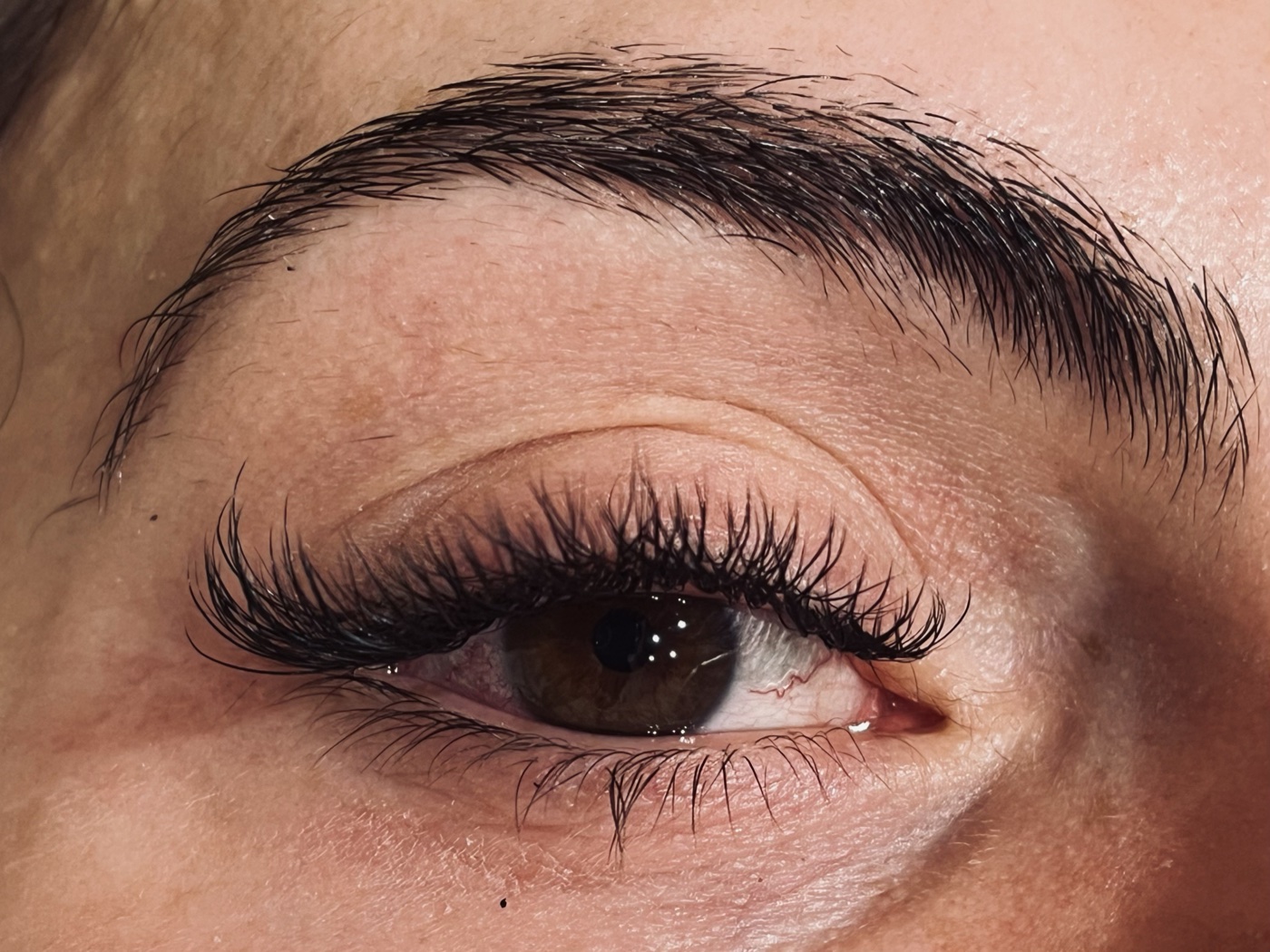
- Wispy — a texture, not a weight class. Spiked longer lengths over a shorter base, applied to classic, hybrid, or volume sets. We compared it directly in wispy lashes vs classic.
For a deeper comparison of the main three, read classic vs hybrid vs volume.
When a lash lift beats extensions. If your natural lashes are reasonably long but straight, and your goal is "my lashes but better" with near-zero maintenance, a lash lift and tint is often the smarter buy. It curls and darkens your own lashes, lasts six to eight weeks, needs no fills, and survives swimming. It can't add length or density — that's the trade.
Lash Lab: The Three Reads, Done Online in Two Minutes
We turned this exact framework into a free tool. Lash Lab is an online lash consultation that walks you through the same three reads — eye shape, natural lash condition, lifestyle — and writes you a brief: a recommended style, the reasoning behind it, and the things your artist should know before mapping your set.
It takes about two minutes. No account, no cost, no obligation to book. Bring the brief to your appointment and the consultation at the chair starts from a real starting point instead of from zero — your artist confirms the reads in person and adjusts from there.
If you're completely new to extensions, our lash extensions for beginners guide covers the appointment itself, aftercare, and what the first week feels like.
Take the free lash consultation, or go straight to booking a set at any of our Edmonton locations. Full style details are on our eyelash extensions page.
FAQ
Which lash extensions should I get for my first set? For most first-timers with average natural lashes, hybrid is the safe answer: fuller than classic, less commitment than volume, and it photographs well. If your natural lashes are sparse, light volume may actually suit you better. Run the three reads above, or take the Lash Lab consultation and bring the brief to your appointment.
Is there a lash extension quiz that actually helps? Most online quizzes just match you to a photo. Lash Lab works differently — it walks the same three reads a lash artist uses (eye shape, natural lash condition, lifestyle) and explains why it recommends what it recommends. It's free and takes about two minutes.
Should I get a lash lift or extensions? Lash lift if you have decent natural length, want low maintenance, and swim or work out a lot. Extensions if you want added length or density that your natural lashes don't have. A lash lift and tint lasts six to eight weeks with no fills; extensions need fills every two to three weeks.
What's the difference between classic, hybrid, and volume? Classic is one extension per natural lash — natural and subtle. Volume is a fan of several ultra-fine extensions per lash — full and soft. Hybrid mixes both. The full comparison, with who each suits, is in our classic vs hybrid vs volume guide.
Can I get extensions if my natural lashes are thin or sparse? Usually yes, but the style choice matters more. Light volume fans distribute weight better than heavy classic lashes on fine natural lashes. If your lashes are damaged rather than just fine, an honest artist will tell you to wait and recover first — ours will.